

Inhalation Anesthesia in Birds: A Practical Guide for Clinic Vets

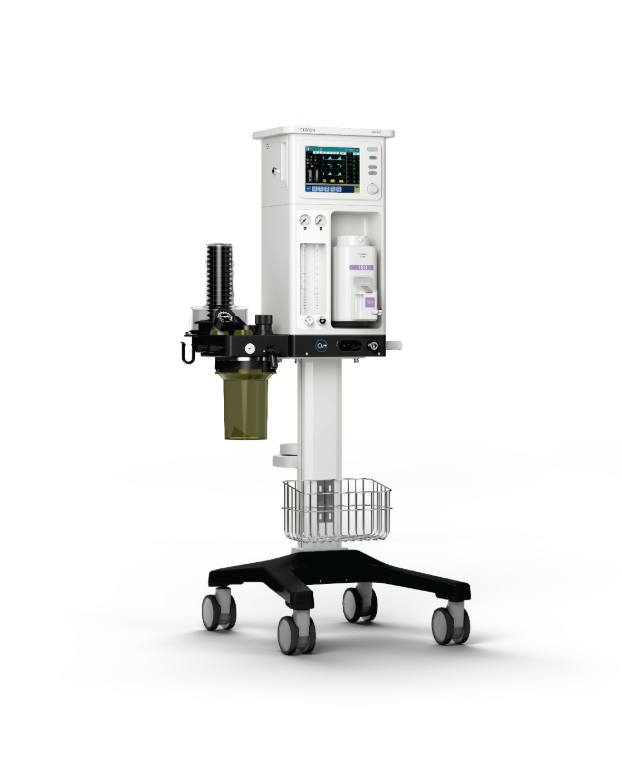
Birds are good candidates for gas anesthesia: their efficient lungs take up and clear the agent very fast, so induction and recovery are quick. The risks come from what makes them different, mainly their air sacs, their small size and how fast they lose heat. Plan for those and avian anesthesia becomes routine.
What is different about birds
| Feature | Why it matters under anesthesia |
|---|---|
| No diaphragm; air sacs move air through rigid lungs | Breathing depends on keel and rib movement. A tight grip or heavy drapes on the keel can stop ventilation |
| Gas exchange in both inspiration and expiration | Very fast response to vaporizer changes, in both directions |
| Complete tracheal rings | Use uncuffed tubes (or leave a cuff deflated) to avoid tracheal injury and stricture |
| Glottis at the base of the tongue, easy to see | Intubation is usually simple in birds above about 100 g |
| High metabolic rate, small body | Hypothermia and hypoglycemia develop quickly |
| Air sacs in the coelom | In dorsal recumbency the organs may press on the air sacs; ventilate |
| With isoflurane, breathing usually stops before the heart | Apnea is an early warning: act at once |
Preparation
- Weigh in grams; calculate drugs and fluids precisely.
- Crop and fasting: the crop must be empty to prevent regurgitation and aspiration. Keep fasting short in small birds, often just long enough to empty the crop, because of hypoglycemia risk; larger birds tolerate longer fasts. Palpate the crop before induction.
- Stabilize sick birds first: oxygen, warmth and fluids.
- Prepare everything before you catch the bird: warmed table, mask, tubes, Doppler, tape and a towel.
- Premedication, such as an opioid and a benzodiazepine, reduces stress and the gas needed in many species.
Induction
- Restrain gently in a towel, never compressing the keel.
- Mask with oxygen first, then raise the agent: sevoflurane 5–8% or isoflurane 3–5%.
- Expect breath-holding at first; keep the mask snug but do not squeeze the bird.
- Once relaxed (loss of righting, relaxed wings and jaw), reduce to maintenance: sevoflurane 2.5–4% or isoflurane 1.5–2.5%, then adjust to effect.
For very small birds that cannot be intubated, maintain by a close-fitting mask. A latex glove stretched over the mask with a small hole for the beak improves the seal and allows gentle ventilation.
Intubation and circuit
- Use an uncuffed tube that fits the glottis without force; cut it short to reduce dead space.
- Tape the tube to the lower beak and check it often: small tubes block easily with mucus.
- Use a non-rebreathing circuit with oxygen at about 2–3 × minute volume (about 200 mL/kg/min), and a minimum flow suited to your vaporizer.
- For surgery of the head, beak or trachea, or upper airway obstruction, an air sac cannula can deliver gas and oxygen directly to a caudal air sac.
Ventilation
Most intubated birds benefit from intermittent positive pressure ventilation. Give about 1 breath every 4–5 seconds by hand, or use a ventilator in pressure control at about 8–15 cmH2O. A correct breath raises the keel like a normal breath. Avoid higher pressures, which can rupture air sacs.
Monitoring birds
| What | How | Target / warning |
|---|---|---|
| Heart rate | Doppler over a superficial artery, ECG, stethoscope | Note the baseline; a sudden fall of 20% or more needs action |
| Breathing | Keel movement, capnography | Apnea = turn gas down and ventilate with oxygen |
| EtCO2 | Sidestream capnograph with low-dead-space adapter | About 30–45 mmHg |
| Blood pressure | Doppler and cuff on wing or leg | Systolic about 90–150 mmHg reported in anesthetized psittacines |
| Temperature | Cloacal or esophageal probe | Prevent any fall: warm from the start |
| Depth | Palpebral, corneal, pedal and cere reflexes | The corneal reflex should stay present; its loss means too deep |
Keeping birds warm
- Heat mat or forced-air warmer from induction to recovery
- Pluck the fewest feathers possible; avoid soaking the skin with alcohol
- Warm fluids, and keep the procedure short
Recovery
- Turn off the vaporizer and ventilate with oxygen until the bird breathes on its own.
- Keep the tube in until the bird swallows, moves its head or starts to move its wings; then remove it.
- Hold the bird lightly wrapped in a towel, upright, so it cannot flap and injure itself.
- Move it to a warm, quiet, dim incubator with oxygen until it perches.
- Offer food soon after recovery, especially in small birds.
Emergency: apnea or arrest
Turn off the gas, ventilate with 100% oxygen at 1 breath every 4–5 seconds, check the heart with the Doppler, and start your avian resuscitation protocol. Because breathing usually stops before the heart, fast action often saves the bird.
Equipment note from Raed Alsharq: The Comen ARK7 delivers ventilation down to about 5 mL with an assisted mode, suitable for many pet birds. For warm, oxygen-enriched recovery, see our Laifute veterinary ICU units. Contact us for details.
This article is for veterinary professionals and is educational only. Avian data are limited; adjust to the species and the individual bird.