

Veterinary Blood Analyzer (CBC): How to Choose One for Your Clinic

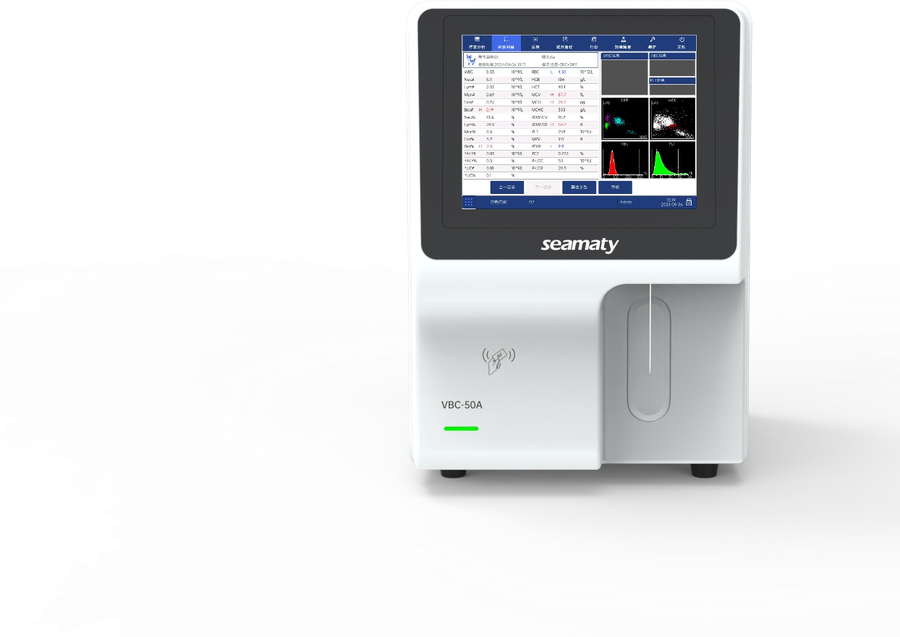
A complete blood count (CBC) is one of the first tests in sick patients, pre-anesthetic screening and follow-up of anemia, infection and inflammation. An in-clinic hematology analyzer gives you the result during the consultation instead of hours or a day later. This guide explains what to compare when you buy one.
3-part or 5-part differential?
A 3-part analyzer separates white blood cells into lymphocytes, granulocytes and a mixed group of mid-sized cells. A 5-part analyzer reports neutrophils, lymphocytes, monocytes, eosinophils and basophils separately, usually using laser flow cytometry. For a clinic that sees sick and referred patients, a 5-part differential gives more useful information, for example separating eosinophilia from a neutrophilic response.
Species coverage
Blood cells differ in size and shape between species, so the analyzer needs validated settings for each species you see. Check that the list includes your main patients: dogs and cats for small-animal clinics, and horses, camels, cattle, sheep and goats for mixed and large-animal practice.
What else to compare
- Sample volume: analyzers that need only a few tens of microliters are easier with cats, puppies, kittens, birds and exotics.
- Speed: results in a few minutes, and how many samples per hour on busy days.
- Reagents and running cost: how many reagents the system uses, the cost per test, and reagent shelf life once opened.
- Scattergrams and flags: scattergrams, histograms and abnormal-cell flags tell you when to look at a blood smear.
- Quality control: built-in QC levels and easy QC records keep results reliable.
- Connectivity: printing, result storage and LIS/HL7 or practice-software connection.
Getting reliable results in practice
- Use EDTA tubes, fill them to the correct volume and mix gently by inversion.
- Run the sample promptly; cell shape and counts change as blood ages.
- Cat platelets often clump and can be counted as large cells, giving a falsely low platelet count. Check a smear when the platelet count is low.
- Review a blood smear for any abnormal result or flag. An analyzer does not replace the microscope.
- Run quality control on the schedule the manufacturer recommends.
CBC analyzers from Raed Alsharq
- Seamaty VBC-50A – 5-part differential with laser flow cytometry, 20 µL of blood for CBC+DIFF, up to 60 samples per hour, multi-species including camels and horses.
- Seamaty VM2 – AI hematology and blood-cell morphology analyzer.
- Comen CH8500-V Series – 5-part veterinary hematology analyzer.
Most clinics pair the CBC analyzer with a biochemistry analyzer such as the Seamaty Qt3. See all veterinary laboratory analyzers.
Frequently asked questions
Is a CBC analyzer enough for an in-clinic lab?
It covers blood cells only. Organ function, electrolytes and glucose need a biochemistry analyzer, so most clinics buy both.
Can a veterinary CBC analyzer test camel blood?
Only if camel is among its validated species. The Seamaty VBC-50A lists camel among its species.
How do I get a quote?
Tell us your species mix and daily sample numbers through the contact page or at info@raedalsharq.com.